
What a health inspection report can and can't tell you
posted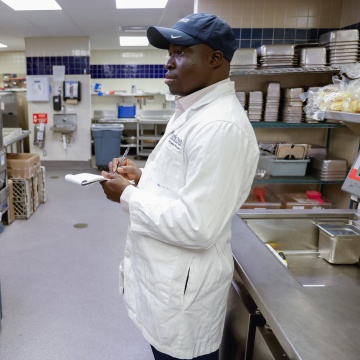
Month after month, one of the most popular pages on our website is our health inspection reports page. Our sanitarians—the folks who inspect restaurants—tell us one of the most common questions they're asked is, "Is XYZ restaurant a good place to eat?" We're glad you're so interested in knowing how your favorite restaurant handles food safety! Let's talk about why we do health inspections and what the reports can and can't tell you.
We do health inspections to make sure establishments are handling your food safely.
We do health inspections of all the places you get food and drinks in Dane County—there are thousands. That includes restaurants, grocery stores, convenience stores, bars, coffee and ice cream shops, and more, whether they're a permanent, mobile, or seasonal establishment.
When food isn't handled safely, people can get sick from eating it. At least once a year we do a routine inspection. They're usually unannounced. Our sanitarians (the folks who do inspections) look at how food is handled, the temperature of the food, and the hygiene and health of the employees. Sometimes they schedule inspections to make sure the appropriate staff will be there.
What an inspection report can tell you
What violations a sanitarian saw during their inspection.
There are two types of violations: priority violations and core violations. Priority violations must be corrected immediately, or within a few days. If not fixed properly, they're more likely to cause food poisoning. The five most common violations that cause foodborne illness (food poisoning) outbreaks are:
- Keeping hot or cold food at the wrong temperature
- Undercooking food
- Dirty utensils and equipment
- Poor employee personal hygiene
- Food from unsafe sources
If these violations can't be corrected during our inspection, a reinspection is required to make sure they're corrected.
Core violations relate to cleaning and maintenance. Some examples are dirty floors and plumbing leaks.
What a sanitarian saw on the day of the inspection.
The inspection is on one day of the year. The annual inspection is to evaluate the establishment against the Wisconsin Food Code but also serve as a liaison and resource. Sanitarians want to build relationships with operators and make sure they have the tools they need to run a safe and healthy establishment.
What an inspection report can't tell you
A letter grade.
Some cities use a letter grade system to help customers evaluate an establishment—this is often depicted on tv, so it's natural to assume this is the case everywhere! We don't use letter grades in Dane County.
Whether somewhere is a "good" place to eat.
You're not going to get a cut and dry answer of whether a place is “good" to eat at. If you see your favorite restaurant had several core violations (see above) at their last inspection, that might worry you. But having one priority violation is more important than several core violations. Review the violations and look at patterns from the last several inspections to get a better sense of a place's overall food handling.
You can report possible problems to us.
Did you experience or see something that doesn't seem quite right? You can report problems to us and we will follow-up.
This content is free for use with credit to Public Health Madison & Dane County .