What does a health inspector do?

posted 
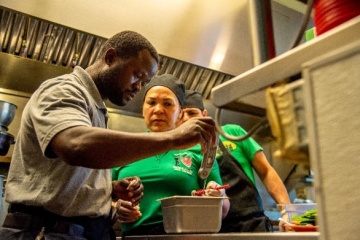
A sanitarian checking the temperature of food in a restaurant.

When you do things like eat out, get a tattoo, or go to a pool, the behind-the-scenes work of our health inspectors, known as sanitarians, helps protect your health and safety. Our sanitarians license and inspect over 4,000 businesses in Dane County, ensuring that the food you eat, the places you stay, and where you recreate are safe. Sanitarians are highly skilled and go through extensive education and training to be qualified to do their work. 

Inspecting businesses and providing education

Sanitarians perform inspections of licensed establishments on site at least once a year. Licensed establishments include:

  • Restaurants
  • Food trucks
  • Temporary food events like festivals and fairs
  • Hotels, motels, and short-term rentals (like Airbnb)
  • Swimming pools
  • Tattoo and body art establishments
  • Campgrounds
  • Recreational and educational camps
  • Manufactured home communities

At inspections, sanitarians check for compliance with state and local health codes (Madison General Ordinance Chapter 7 and 9, Dane County Ordinance Chapter 46 and 48). If they find violations, they document them and provide onsite consultation and education to operators to help them understand and correct violations. Later, a re-inspection is done to ensure the establishment is following health codes. 

Sanitarians also review applications for permits to open new establishments, making sure the future operators have the proper qualifications. 

You can check out our inspection reports!

You can read our inspection reports on our website. The reports tell you the conditions our sanitarians saw at the time of the inspection. The reports may not reflect corrective actions the establishment made, or the current condition. When you read a report, try not to focus on the number of violations, but on the types of violations. We do not score or grade health inspections. 

Relationship-building is a big part of the job

Our sanitarians focus on building a positive relationship with a business prior to an inspection, because it leads to better results. We want businesses to view their sanitarian as a partner in their success, able to provide valuable knowledge and resources. When the inspection process is more about providing guidance and an opportunity to learn and improve, it leads to better compliance with health codes, safer food, and better business ratings.  

Keeping the community safe and helping businesses thrive

One of our sanitarians going through training says, 

One of the most rewarding parts of the training process is applying what I learned through my reading and shadowing experiences and applying it to real world situations. It's incredibly fulfilling knowing our work helps keep communities safe while also supporting business owners and their livelihoods.

Becoming a sanitarian is a lengthy, rigorous process

Within the first five years of employment, sanitarians are required to complete 24 months of field training, pass departmental and state standardization exercises, complete 20 hours of continuing education every three years, and pass the Registered Sanitarian certification. This credential is rigorous and difficult and requires a combination of one to eight years of education and environmental health work experience to be eligible to take the exam; and, on average, requires six months to a year of studying to prepare for the exam.

What is training like for a sanitarian?

Work assignments are closely reviewed by a supervisor at first, performed with an increasing level of autonomy once a sanitarian learns standards, policies, and procedures. 


Below, our sanitarians explain in their own words. 

Training as a sanitarian is a mix of classroom learning, shadowing our experienced staff members, and getting hands-on in the field. This position is equal parts science, problem solving, and relationship building.

I'm honing my skills in effective communication and learning the 150+ pages of Wisconsin Food Code (which provides legal information on our state's law for all retail food establishments).

Every day I get the opportunity to use science to improve our community. In a typical day, I meet new operators, build relationships, brainstorm, educate, and enforce. I use my analytical skills and attention to detail to notice things like risky food processes, unsafe food temperatures, sewage backups, and building issues.

Health inspections keep our community safe

We do health inspections to make sure businesses are safe, clean, and free of hazards. This important work acts as an invisible shield to protect you from foodborne and communicable illnesses, and injury. If you have concerns about a business, you can fill out a form to report a problem. One of our sanitarians will contact you to discuss your concerns and, if necessary, visit the establishment for an inspection. Your name will not be shared with the business, and you'll be helping keep our community safe.  

This content is free for use with credit to Public Health Madison & Dane County .

Was this page helpful to you? * required